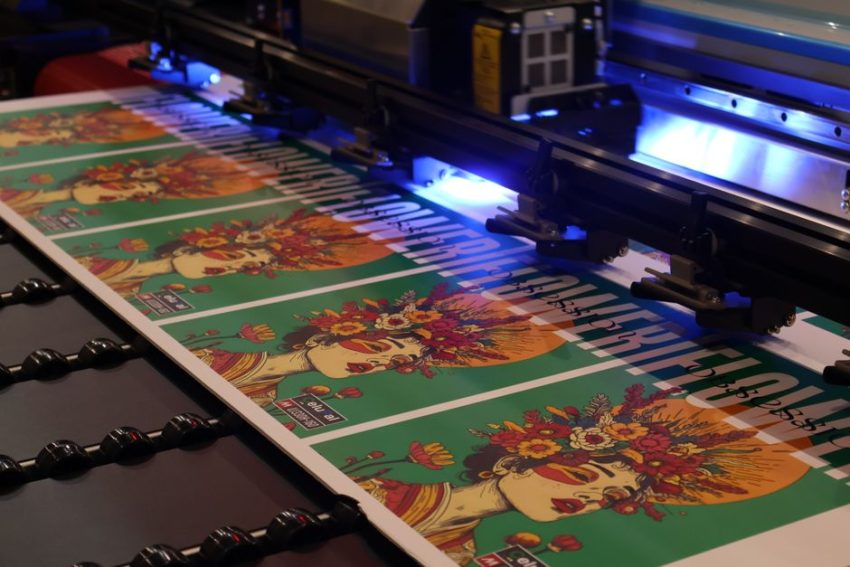
The procurement decision is whether a 6ft/1.8m UV roll-to-roll printer can meet defined production requirements for home and consumer goods. The buyer’s task is to translate the product range into measurable substrate, format, quality, workflow, and output requirements.
The available reference labels identify relevant company and product pages, but they do not contain confirmed interface specifications or production results. Fit should therefore remain unconfirmed until supplier documents and controlled sample evidence address the buyer’s requirements.
A practical evaluation moves through five steps: define the device-side requirement, issue a preliminary request for quotation, compare supplier drawings and parameters, validate a representative sample configuration, and approve production only against accepted evidence.
What product requirements should define equipment fit?
Start by grouping the intended products according to printable substrate, construction, surface condition, decoration area, and required appearance. The Yongkeng home appliances reference should be reviewed to identify which product families belong within the evaluation scope, not to infer printer suitability.
The page labeled our products should also be reviewed to create a product-level requirement record. For each selected item, record whether printing occurs directly on a flexible material, on a label, or through another converted component, because roll-to-roll equipment requires a defined web-based process.
Product engineering and production should approve this requirement record. It is closed only when representative substrates, artwork dimensions, color expectations, finishing steps, annual or batch demand assumptions, and unacceptable process routes are documented for supplier review.
What should the preliminary quotation request contain?
The preliminary RFQ should describe the proposed workflow without presenting assumptions as accepted facts. It should list candidate substrate families, roll dimensions, printed area, artwork characteristics, finishing operations, operating pattern, facility constraints, and the quality criteria that will later govern sample review.
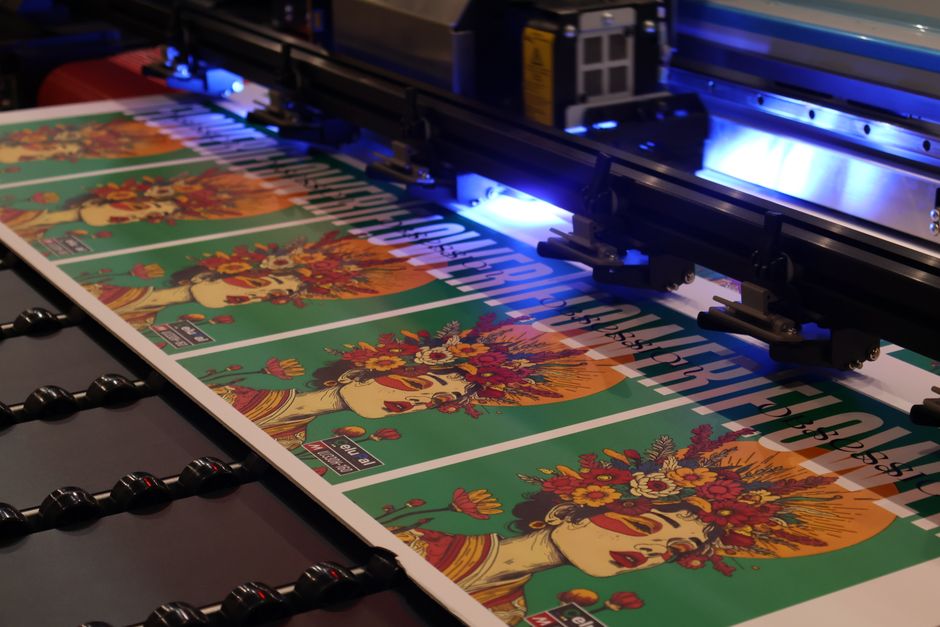
Review the 6ft/1.8m UV roll-to-roll printer page at this stage because it identifies the candidate equipment requiring clarification. Ask the supplier for the current technical datasheet, configuration list, dimensional drawing, supported media conditions, utility schedule, operating limits, and available inspection or test documentation.
Separate assumptions from exclusions. For example, an RFQ may assume a roll-fed substrate while excluding rigid parts, unsupported surface treatments, or unverified finishing processes. Procurement owns the quotation request, while engineering approves assumptions and records every supplier exception before commercial comparison.
Which supplier information is needed for technical comparison?
A product title alone is not a technical baseline. The comparison requires a controlled supplier package covering printable width, roll handling, substrate restrictions, ink and curing configuration, resolution or quality modes, production-speed basis, environmental limits, utilities, software workflow, maintenance, and safety provisions.
The supplier should identify which values are standard, optional, conditional, or configuration-dependent. Drawings should show media path, loading and unloading space, access clearances, machine footprint, and connection points. Parameter sheets should carry revision identifiers so later changes are visible.
Use SINOTEC digital advertising equipment and consumables to confirm the responsible commercial and technical contact, then request the exact document package for the quoted configuration. Supplier engineering provides the evidence; the buyer’s engineering reviewer closes each item by recording acceptance, rejection, or a required trial.
How should the interface matrix control open questions?
An interface matrix prevents commercial descriptions from being mistaken for engineering confirmation. It should connect every buyer requirement to the current evidence gap, requested document, responsible reviewer, and closure stage. Unknown values must remain visible rather than being replaced with estimates.
The initial matrix below is suitable for RFQ release. It is intentionally incomplete because the buyer’s product specification and the supplier’s controlled technical package have not yet been compared.
| Check | Available information or gap | Required evidence | Owner | Closure or stage |
|---|---|---|---|---|
| Printable format | 6ft/1.8m appears in the candidate label; usable width unknown | Dimensioned media and print-area drawing | Supplier engineering | RFQ clarification |
| Substrate compatibility | Target materials not yet matched; pending supplier confirmation | Supported-media limits and sample-material review | Buyer and supplier engineering | Before sample request |
| Roll handling | Roll dimensions, mass, tension, and core requirements unknown | Media handling specification | Supplier engineering | Drawing review |
| Ink, curing, and adhesion | Configuration and acceptance criteria unknown | Configuration sheet and agreed sample test plan | Quality and supplier | Sample validation |
| Output requirement | Required production rate and quality mode unknown | Buyer demand profile and supplier mode declaration | Production engineering | Technical review |
| Utilities and installation | Power, ventilation, environment, and space pending confirmation | Utility schedule and installation drawing | Facilities | Before purchase approval |
The technical lead should review the matrix with procurement, quality, production, and facilities. A row closes only when a controlled document, accepted written clarification, or approved test record answers the stated check. Commercial agreement alone is not technical closure.
What should a sample request verify?
A sample request is different from a preliminary quotation. It must identify the exact candidate configuration, representative substrate, roll preparation, artwork file, print mode, ink or curing arrangement, finishing route, and quantity needed to evaluate the defined risks.
The validation purpose should be explicit. Depending on the accepted product specification, review may cover image placement, visible defects, color agreement, adhesion, resistance after finishing, handling through downstream operations, repeatability, and usable output. Methods and pass criteria must be agreed before testing.
Quality owns the validation plan, production observes workflow suitability, and supplier engineering records the machine configuration and operating conditions. The sample stage closes when results are documented against predefined criteria and deviations have an assigned disposition; an attractive demonstration sample alone is insufficient.
When is the printer ready for production approval?
Production approval follows design acceptance rather than the quotation or sample request. The approved baseline should identify the machine configuration, options, media specification, artwork workflow, operating window, utilities, safety requirements, maintenance responsibilities, training, and installation acceptance activities.
The approval file should include the accepted supplier drawings, final parameter schedule, resolved interface matrix, sample validation record, deviation decisions, and agreed acceptance test plan. Procurement should also ensure that quotation language and purchase documents reference the same controlled configuration.
A cross-functional reviewer—typically engineering with quality, production, facilities, and procurement—should authorize release. Closure occurs only when technical requirements are accepted, open risks have approved controls, and the evidence needed for delivery, installation, and operational acceptance is defined.
Conclusion:
A 6ft/1.8m UV roll-to-roll printer should be treated as a candidate until its documented configuration and sample evidence are matched to the buyer’s home and consumer goods production requirements. The format label by itself does not establish procurement fit.
The fastest route to a defensible decision is to define representative products and substrates, issue an assumption-based RFQ, obtain controlled supplier drawings and parameters, maintain the interface matrix, and request samples designed around specific technical risks.
Production approval should be issued only for the accepted design and its recorded acceptance basis. This staged process gives procurement a clear outcome: approve the defined configuration, require corrective evidence, change the proposed workflow, or reject the candidate.